Studying about Japan? Our programs
make learning about Japan fun!
Studying about Japan? Our programs
make learning about Japan fun!
Discover Japan is a partnership between the Japanese Canadian Cultural Centre and the Association for Japanese Culture
Our highly academic programs, which augment the Ontario Curriculum for Social Studies Japan, are important to Canada for survival in the new millennium.
The Association for Japanese Culture (A.J.C) has brought Japan "live" to schools since 1978 and these programs have been raved about as "the best school trip ever" by teachers and students. This new partnership between the Japanese Canadian Cultural Centre and the A.J.C. will bring the Discover Japan project to new heights. Discover Japan will be unparalleled in the quality of material delivered and provide exciting, unique and innovative hands-on experiences for students across Ontario.
There are many units of programs and half or a full-day session can be arranged. It runs from 10:00am to 2:00pm at the Japanese Canadian Cultural Centre.
Morning Session: 10:00 am - 11:30 am (2 units)
Afternoon Session: 12:30 pm - 2:00 pm (2 units)
*Full day participants must bring their own lunch
Sample Program Selection and Approximate Cost for Full-day Experience
For 30 students participating in the units Kimono, Toys and Games, Origami, and Japanese Writing System: $250
Please choose two units of programs for each morning or afternoon session:
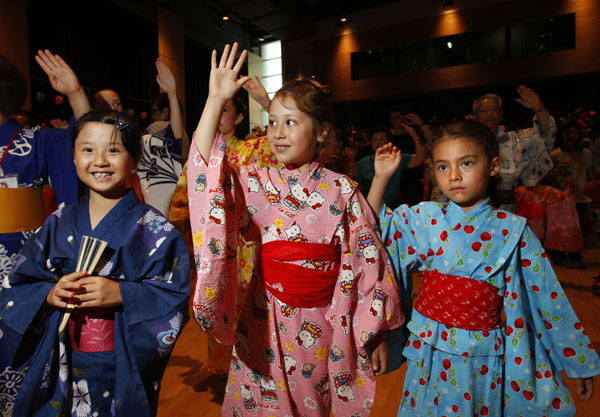
Kimono2 UNITSThis traditional Japanese costume is now worn only for special occasions such as weddings, tea ceremonies, formal parties, and festivals. KIMONO is worn with OBI (sash), TABI (socks) and ZORI (footwear) or GETA (clogs) 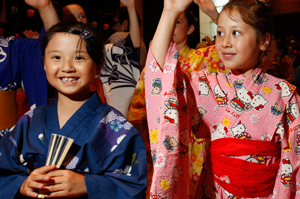
|
Tea Ceremony1 UNITCHANOYU or SADO is an aesthetic form of serving and drinking powdered green tea called MATCHA. The spirit of the ceremony, influenced by Zen, aims to purify one's soul. 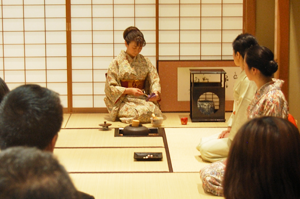
|
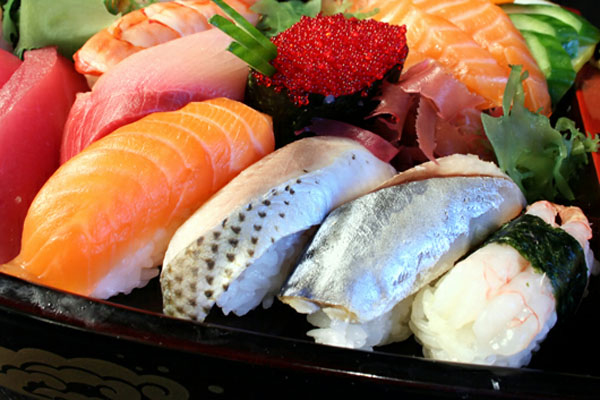
Japanese Food1 UNITTraditionally the Japanese diet has consisted mainlty of rice, seafood, soybean products, and fruits and vegetables, reflecting Japan's characteristic topography and climate. 
|
Hands on Calligraphy2 UNITSThis hands-on program is a half-day workshop to provide students with an opportunity to write Japanese characters on Japanese paper with SUMI ink. 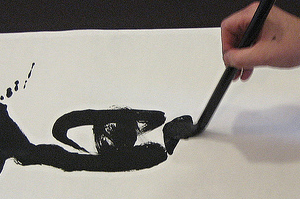
|
Canadian Trading Partner1 UNITJapan is Canada's important export market and source of imports. Canada exports materials such as lumber, coal, grain/seed, 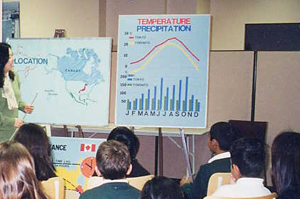
|
Medieval Japan and Samurai2 UNITSThe SAMURAI were medieval warriors in Japan. With panels and videos, students will learn about the SAMURAI and their contribution to Japanese culture. 
|
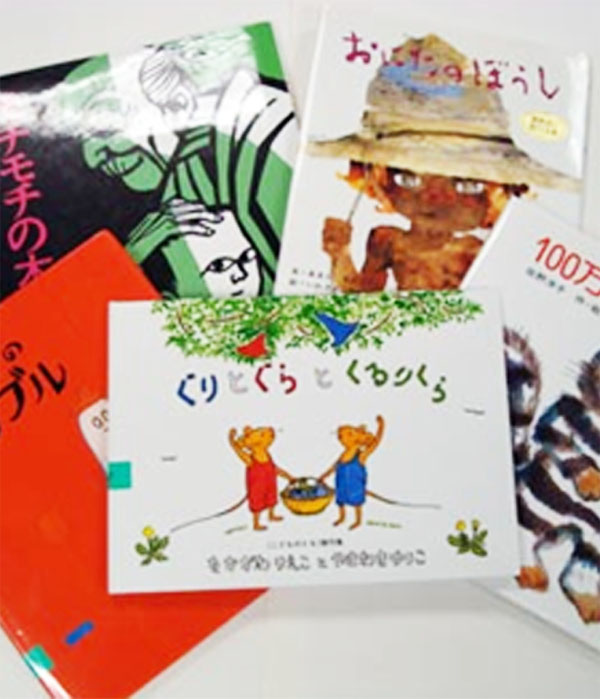
Story Telling1 UNITKAMISHIBAI (paper drama) is a form of storytelling accompanied by a sequence of pictures. This gives a more dramatic effect than telling stories with an ordinary book. An old Japanese fable is told in this method. 
|
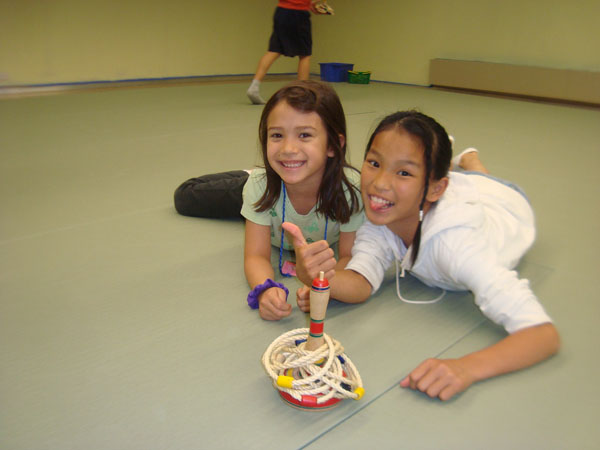
Toys and Games1 UNITTraditional Japanese toys are paper balloons, bamboo dragon flies, bean bags, KENDAMA (a wooden ball attached to a sword), HANETUKI (a pair of wooden rackets and a birdie) and DARUMA OTOSHI. 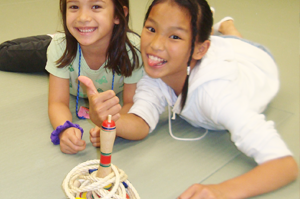
|
Origami2 UNITSA sheet of ORIGAMI paper is a perfect square, colored on only one side for contrast. The creativity for transforming a sheet of paper into dimensional shapes is infinite. 
|
Crafts
1 UNITAge-appropriate craft activities may include KOKESHI doll or SHIORI (bookmark) doll. Objects are made with exquisite Japanese papers supplemented by Canadian materials. 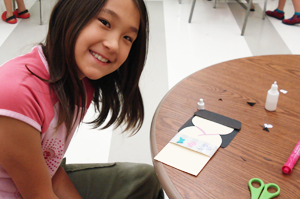
|
Festivals and Dance1 UNITA short video shows annual events and community festivals throughout Japan. (Participation) - BON-ODORI (casual dance). Each students wears a HAPPI (cotton jacket) and HACHIMAKI (headband) 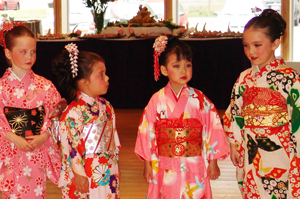
|
Japanese Writing System1 UNITKANJI, HIRAGANA, and KATAKANA are the three kinds of characters used in writing the Japanese language. KANJI was brought from China in the 5th century. HIRAGANA and KATAKANA contain 46 letters each. 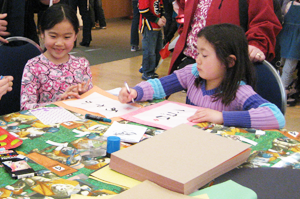
|
All material within this website are copyright Discover Japan 2012.
No content may be duplicated, distributed, or modified without the proper consent from Discover Japan.